“If You Knew What I Knew!” -Jeremy Corbell UNLEASHES On Jesse Michels
This is an AI-generated summary of ““If You Knew What I Knew!” -Jeremy Corbell UNLEASHES On Jesse Michels” — a 3 hr YouTube video by Jesse Michels, published June 7, 2026. It condenses the full transcript into 9 key takeaways with clickable timestamps.
Summary
Jeremy Corbell discusses the relentless pursuit of truth regarding UFOs and UAPs, highlighting the challenges faced by whistleblowers and journalists in exposing government secrecy, the existence of non-human technology and biologics, and the ongoing efforts to shape public narrative.
Key Points
- Whistleblowers like Dylan Borland have testified about encounters with silent, triangular craft with unique power sources, while others, such as Matthew Sullivan, who had direct craft experience, died suspiciously before he could testify.
- Corbell's extensive investigation and documentary work on Bob Lazar's claims about reverse-engineered propulsion systems and non-Earth materials at S4 (Area 51) led him to believe Lazar was truthful and present at the facility.
- The government's "legacy program" is described as a complex, multi-faceted "Rubik's Cube" of isolated investigations involving various hardware, software, and minds, making a comprehensive understanding of its scope challenging.
- Evidence suggests the existence of non-human power sources, possibly pyramid-shaped, which the U.S. has attempted to integrate into constructed craft, though with limited success due to incompatibility.
- Multiple sources, including some direct testimonies, indicate the presence of non-human biological entities, with autopsy reports being a recurring theme in Corbell's investigations.
- Corbell asserts that elements within government agencies, including ODNI and Arrow, have engaged in counterintelligence, disinformation campaigns, and harassment against whistleblowers and journalists to control the UAP narrative.
- Jeremy Corbell and George Knapp meticulously vetted David Grusch's ICIG complaint, which revealed the U.S. government possesses and reverse-engineers non-human craft and biologics, a claim deemed urgent and credible by the ICIG.
- Corbell stresses that achieving full transparency requires continuous public pressure, curiosity, and the collective voice of individuals to challenge institutional secrecy and demand the truth.
- Despite the deep-seated secrecy and manipulative efforts, Corbell remains optimistic that the current UAP disclosures represent "the beginning of infinity" and a potential paradigm shift for humanity's understanding of its place in the universe.
Summarize any YouTube video, free
You just read an AI summary of this video. Paste any other YouTube link and get the key points with clickable timestamps in seconds — no signup, 5 free a day.
More Resources
More Summaries
 2 hr 39 min
Brazil's Most Famous UFO Cases Confirmed Real By Defense Minister
Former Brazilian Minister of Defense Aldo Rebello publicly acknowledges the reality of unidentified celestial phenomena, discussing Brazil's documented history of UFO encounters and advocating for int
 1 hr 12 min
The Law Of INSTANT “Manifestation”
The video explains that by reshaping your perception of manifestation, releasing the belief that success must take time, and using intense, calm emotions combined with relaxation and visualization, yo
 12s
12s3D Hologram Fan Unleashed #3d #hologram #led #ledlights #shorts
The provided transcript is too short to generate a meaningful summary or key points.
 46 min
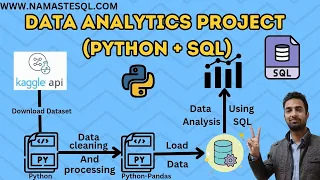
End to End Data Analytics Project (Python + SQL)
This video provides an end-to-end data analytics project, demonstrating how to download data from Kaggle using Python, perform data cleaning and transformation with Pandas, load the processed data int
 16 min
I Stopped Building AI Agents and Did This Instead
The video argues that AI's effectiveness is less about the tool itself and more about the user's internal organization, proposing a simple three-folder system (Atlas, Projects, End Products) as a refl