Atrial Fibrillation: New Solutions for an Old Problem
This is an AI-generated summary of “Atrial Fibrillation: New Solutions for an Old Problem” — a 38 min YouTube video by UT Health East Texas, published March 1, 2021. It condenses the full transcript into 10 key takeaways with clickable timestamps.
Summary
Dr. Andrea Cooley explains atrial fibrillation as a serious and growing health problem, detailing its causes, significant risks like stroke and heart failure, and a range of treatment options from medications and devices to advanced ablation procedures, including a new minimally invasive hybrid maze.
Key Points
- Atrial Fibrillation (Afib) is a serious and increasingly common heart condition, affecting millions and posing significant health risks, contrary to its past perception as a minor nuisance.
- Afib significantly increases the risk of stroke by five times, heart failure by three times, and early cardiac death by two times, with nearly 50% of patients dying within five years of their first hospitalization.
- Treatment plans are individualized based on Afib severity and patient history, emphasizing that lifestyle modifications, such as a healthy diet and regular activity, are vital for prevention and management.
- Afib is disproportionately prevalent in the U.S. compared to other developed and developing nations, largely due to American lifestyle factors, with East Texas showing particularly high hospitalization rates.
- Afib occurs when a cluster of cells in the atrium sends out chaotic electrical impulses, causing the atrium to wiggle inefficiently instead of contracting properly, leading to complications even without a rapid heart rate.
- The progression of Afib involves the development of scar tissue and stretching of heart chambers, which further disrupts electrical pathways and transforms early, intermittent Afib into more persistent and complex forms with swirling 'rotors.'
- Stroke prevention is paramount in Afib treatment, primarily through blood thinners, or for intolerant patients, through devices like the Watchman or AtriClip to seal off the left atrial appendage where most clots form.
- While rate control medications manage symptoms, rhythm control aims to restore normal sinus rhythm through antiarrhythmic drugs or cardioversion, though these may not be long-term solutions for persistent Afib.
- Ablation procedures, including catheter ablation for early Afib and the more extensive surgical Maze procedure for advanced cases, aim to create scar tissue walls to block chaotic electrical signals.
- The innovative hybrid Maze procedure offers a minimally invasive, two-stage approach combining surgical and catheter ablation, providing high success rates for refractory Afib without requiring open-heart surgery.
Summarize any YouTube video, free
You just read an AI summary of this video. Paste any other YouTube link and get the key points with clickable timestamps in seconds — no signup, 5 free a day.
More Resources
More Summaries
 57s
57sSmartbox 10-Year Anniversary Sale | 50% Off Programming & More
SmartBox is offering a limited-time anniversary promotion with steep discounts on its vehicle programming tools and accessories, plus free services, for both existing and new customers.
 43 min
TINNITUS DISAPPEARS! PRESS THIS POINT AND FORGET THE RINGING FOREVER
This video explains that tinnitus is primarily a brain-based alarm signal, not an ear disease, and offers a comprehensive approach to identify its type, eliminate aggravating factors, nourish the nerv
 8 min
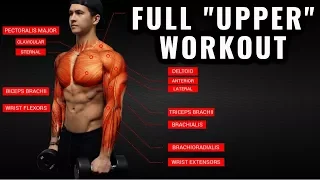
8 minThe Best Science-Based Upper Body Workout for Growth (Chest/Back/Arms/Shoulders)
The video explains how to structure an effective upper-body workout within an upper‑lower split, emphasizing optimal compound exercises, proper angles, and balanced muscle development.
 3 min
3 minWho was Imam al-Ghazali?
The video discusses the significance of Imam al-Ghazali's work, particularly his book 'The Revival of the Religious Sciences', in providing a comprehensive and accessible understanding of Islamic thou
 33s
33sBoxing Instructor Teaches Young Girl an Important Lesson 👀
This video appears to be a short, chaotic clip of people shouting and seemingly encouraging a physical confrontation, with phrases like "Fight back" and "You want to hit guys?" being prominent.