The Primer Problem: Why Discipleship Isn't Sticking | Jamie Winship
This is an AI-generated summary of “The Primer Problem: Why Discipleship Isn't Sticking | Jamie Winship” — a 1 hr 8 min YouTube video by Ordinary Movement, published April 16, 2026. It condenses the full transcript into 10 key takeaways with clickable timestamps.
Summary
The core problem in the Christian space is the struggle between empire thinking (fear, power, control, scarcity) and kingdom thinking (love, service, abundance), which hinders genuine discipleship by focusing on external performance rather than internal identity and relationship with God.
Key Points
- The primary issue addressed is the conflict between 'empire thinking,' characterized by fear, power, competition, and scarcity, and 'kingdom thinking,' which embodies love, service, and abundance.
- Empire thinking, prevalent in both secular and religious contexts, leads to a worldview of separation and scarcity, where individuals believe they are lacking and must strive to acquire.
- A key aspect of kingdom living is learning to receive from God, starting with asking how God wants to serve you, which is counterintuitive to the self-protective and self-promoting nature of empire thinking.
- The concept of 'stuckness' is a fear-based falsehood; true stuckness arises from believing lies about oneself, such as 'I am not enough,' which is a core tenet of empire thinking.
- Traditional discipleship often falls short by focusing on 'producing' for God (converts, income) rather than 'becoming' who God created you to be, leading to a performance-based faith.
- True discipleship is about becoming who God made you to be, which requires an experiential relationship with Christ, not just performing religious activities or converting others.
- This empire mindset infiltrates discipleship, causing people to feel 'stuck' because they focus on external actions and performance rather than their identity in Christ and how to hear from God.
- Jesus's discipleship focused on teaching his followers *how* to know what to do by hearing from the Father, rather than simply dictating actions, enabling them to navigate complex situations.
- Hearing from God involves asking Him questions, listening to His responses through scripture, impressions, and ideas, and discerning them based on their consistency with His word and their fruit of love, joy, and peace, not fear or shame.
- Confession, in this context, is reframed as 'truth-telling' about one's identity in Christ, rather than just admitting to sins, which leads to mind change (repentance) and ultimately form change (transformation).
Summarize any YouTube video, free
You just read an AI summary of this video. Paste any other YouTube link and get the key points with clickable timestamps in seconds — no signup, 5 free a day.
More Resources
More Summaries
 11 min
A Week in My Life in NYC in My 20s
The video is a vlog of a day in the life of YouTuber Lookie Pookie and his friends, showcasing their daily activities, interactions, and experiences in New York City.
 5 min
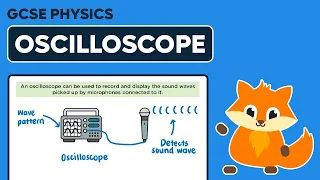
5 minMeasuring Speed of Sound - Oscilloscope - GCSE Physics
This video explains how an oscilloscope displays sound waves as electrical signals over time and details a method for measuring the speed of sound using two microphones connected to an oscilloscope.
 16 min
What ACTUALLY Makes People Buy Things (Pricing Psychology Explained)
This video delves into the psychology of consumer purchasing, explaining how pricing strategies, product mix development, and data-driven customer personas can be leveraged with modern tools to create
 1 hr 10 min
Nervous System Reset: Do THIS Every Day to Rewire Your Brain From Stress and Anxiety
Dr. Nadine Burke Harris explains that trauma is the body's biological response to overwhelming stress, often stemming from adverse childhood experiences, and introduces "buffering" as a set of interve
 14 min
Wolverine Inferno XTS: Will it prevent Midcap Syndrome on MTWs?
This video evaluates the new Wolverine Inferno XTS engine's ability to resolve "midcap syndrome" and improve consistency in MTW airsoft replicas compared to the older Inferno Gen 2, concluding it does