Graph RAG Simply Explained
By codebasics
This is an AI-generated summary of “Graph RAG Simply Explained” — a 14 min YouTube video by codebasics, published September 7, 2026. It condenses the full transcript into 9 key takeaways with clickable timestamps.
Summary
GraphRAG is an advanced Retrieval-Augmented Generation (RAG) technique that overcomes the limitations of naive vector-based RAG by building and traversing knowledge graphs to understand complex relationships between entities and provide more contextual and accurate answers.
Key Points
- Naive RAG, which relies on semantic similarity of text chunks, often fails to establish relationships between different pieces of information, leading to incomplete or irrelevant answers for complex queries requiring relational understanding.
- Knowledge graphs provide richer context by explicitly mapping relationships, such as 'binds to,' 'triggers,' or 'inhibits,' which are crucial for understanding complex interactions that simple text chunks cannot convey.
- GraphRAG addresses these limitations by converting a knowledge base into a knowledge graph, where nodes represent entities or chunks of information and edges explicitly define the relationships between them.
- The GraphRAG pipeline consists of an indexing phase where source documents are chunked, and LLMs extract entities and relationships to build a comprehensive knowledge graph.
- During indexing, techniques like entity resolution and community detection are employed to enhance the quality and structure of the knowledge graph, which is then stored in a specialized graph database like Neo4j.
- The retrieval phase begins with a vector search to identify a relevant sub-area within the potentially vast knowledge graph, followed by graph traversal to pinpoint the specific information needed to answer a query.
- An LLM then consumes the assembled subgraph resulting from the traversal to generate a human-readable, comprehensive answer, leveraging the contextual relationships found within the graph.
- GraphRAG is particularly beneficial for use cases that demand context from interconnected reports, require tracing complex relationships, involve multi-hop reasoning, or where explainability of the generated answers is critical.
- In contrast to vector RAG, which is suitable for direct fact lookups and independent text blocks, GraphRAG is essential when answers are distributed across multiple chunks and require connecting facts across different parts of the knowledge base.
Summarize any YouTube video, free
You just read an AI summary of this video. Paste any other YouTube link and get the key points with clickable timestamps in seconds — no signup, 5 free a day.
More Resources
More Summaries
 22 min
If You’re Feeling Behind in Life, Watch This
This video reassures listeners that they are not behind in life, explaining the psychological and cultural reasons for this common feeling and providing practical strategies to overcome comparison and
 19 min
My Complete Local AI Setup - $7000+
This video details a $7,000 local AI setup, showcasing specific hardware, software optimizations, and inference engines to run large language models efficiently and achieve speeds comparable to or exc
 26 min
I became a millionaire at 26. Here's 13 lessons for anyone in their 20s.
This video offers advice to individuals in their 20s on how to build a foundation for success and fulfillment by prioritizing different forms of capital, managing personal growth, and navigating relat
 6 min
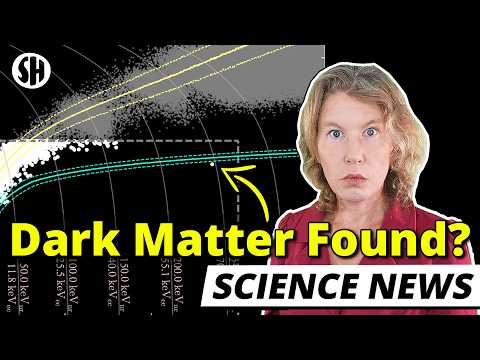
6 minDark Matter Finally Detected?
The LUX ZEPLIN experiment has detected a single, unusual data point that could potentially be the first evidence of a heavy dark matter particle, though more data is needed to confirm this significant
 2 hr 23 min
Tobi Lütke: 21 Years of Building Shopify
Tobi Lütke, CEO of Shopify, shares his unique philosophy on company building, emphasizing a first-principles engineering approach, the importance of differentiation, fostering high-agency talent, and