Getting Started with Verilog
By Hardware Modeling Using Verilog
This is an AI-generated summary of “Getting Started with Verilog” — a 37 min YouTube video by Hardware Modeling Using Verilog, published August 18, 2017. It condenses the full transcript into 9 key takeaways with clickable timestamps.
Summary
This lecture introduces Verilog design principles, focusing on module structure, behavioral vs. structural descriptions, and the two main paths for Verilog code: simulation for verification using test benches, and synthesis to hardware like ASICs or FPGAs.
Key Points
- Verilog designs are organized into modules, each starting with the `module` keyword and ending with `endmodule`, which can be instantiated to create hardware copies.
- Modules can be described either structurally, detailing interconnections of components, or behaviorally, using Boolean expressions or algorithmic descriptions.
- After writing a Verilog design, engineers can either simulate it for functional verification or synthesize it to target specific hardware like Application Specific Integrated Circuits (ASICs) or Field Programmable Gate Arrays (FPGAs).
- ASICs offer high performance and packing density but involve high costs and long development cycles, making them ideal for mass-produced hardware.
- FPGAs provide fast turnaround times for in-lab prototyping and testing, though with a trade-off in performance and area compared to ASICs.
- The course emphasizes learning Verilog language features and verifying designs through simulation, recommending free tools like Icarus Verilog (Iverilog) and GTKWave for this purpose.
- A typical design flow involves initially coding modules behaviorally for ease, then selectively converting critical parts to structural specifications for better control over performance and efficiency.
- Simulation requires a 'test bench' module to generate input stimuli for the Design-Under-Test (DUT) and monitor its outputs, similar to running a software program.
- Verilog simulations are compiled using `iverilog` and executed with `vvp`, with outputs viewable as text or graphically as waveforms using `gtkwave` after dumping value changes.
Summarize any YouTube video, free
You just read an AI summary of this video. Paste any other YouTube link and get the key points with clickable timestamps in seconds — no signup, 5 free a day.
More Resources
More Summaries
 8 min
8 minMs Dhoni's GREATEST Speech Ever | BEST Motivation of All Time [MUST WATCH]
The video emphasizes the importance of staying present, continuous self-improvement, emotional control, honesty, and hard work, while learning from mistakes and embracing challenges to achieve success
 3 hr 19 min
【Tales of Arise】FULL PARTY FINALLY | Part 7
This video chronicles a lengthy gameplay session of Tales of Arise, focusing on completing side quests, exploring new areas, and customizing characters with DLC items, all while the streamer deals wit
 22 min
CODA | Omeleto
This video tells the story of a CODA (Child of Deaf Adults) who, as a dancer, navigates the challenges of her two colliding worlds, ultimately finding her true identity and self-expression through her
 12 min
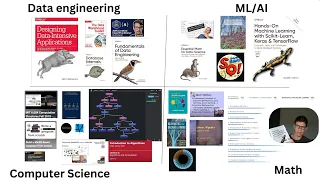
one year of studying (it was a mistake)
The speaker reflects on a year spent self-studying math, computer science, and AI, concluding that his consumption-heavy approach was largely inefficient and outlining a new project-focused strategy f
 10 min
3 Things CM's NEED To Know (that most don't)
This video explains three key habits of elite midfielders: receiving and playing with the correct feet for efficiency, adapting to poor passes by changing body orientation, and manipulating the ball's