Motion Types & Burdens | Vrinda Kudsia
By English Debating Society SBSC
This is an AI-generated summary of “Motion Types & Burdens | Vrinda Kudsia” — a 1 hr 20 min YouTube video by English Debating Society SBSC, published October 20, 2023. It condenses the full transcript into 10 key takeaways with clickable timestamps.
Summary
This video provides a comprehensive overview of different types of debate motions, explaining their structures, burdens for government and opposition, and key concepts like fiat and definitions.
Key Points
- Debate motions are guidelines, not strict rules, and can evolve over time.
- Motions are typically introduced with 'this house' and can be accompanied by a context slide providing assumed-true information.
- There are three primary types of motions: policy, analysis, and actor motions.
- Analysis motions include 'this house believes that X' (value judgments), 'this house supports/opposes X' (total support/opposition without fiat), 'this house regrets X' (retrospective harm analysis with counterfactuals), and 'this house prefers X' (comparative analysis).
- Policy motions ('this house would do X') involve debating the implementation of a policy, with government fiat assumed, meaning the policy is assumed to pass and be implementable.
- Government fiat in policy motions means assuming the policy will pass parliament and the government has the resources to implement it, but criticisms of the policy's consequences are still valid.
- Definitions are crucial in all motion types to establish the scope and terms of the debate, and illegitimate definitions can be challenged.
- In 'this house supports/opposes X' motions, teams must support or oppose the subject in its entirety and cannot use fiat, relying instead on likelihood analysis.
- Regret motions are retrospective, requiring government to prove the world would be better without the subject (X) by presenting a counterfactual, while opposition defends the status quo.
- Actor motions ('this house as X would do Y') require debating from the specific perspective of the actor, considering their interests, knowledge, and values.
Summarize any YouTube video, free
You just read an AI summary of this video. Paste any other YouTube link and get the key points with clickable timestamps in seconds — no signup, 5 free a day.
More Resources
More Summaries
 13 min
How to Grow on Substack With Notes (With No Audience)
The video teaches creators how to use Substack Notes strategically to turn readers into paying subscribers rather than just chasing likes, by understanding discovery mechanics and crafting teaser-styl
 8 min
How I'd Grow a Substack From Zero (Beginner Guide)
This video outlines a strategic system called 'Create, Connect, Convert' to help content creators gain their first 100 subscribers on Substack by focusing on niche clarity, foundational content, and a
 2 min
but how do they fit the same amount into a smaller pill??
This video investigates how Advil fits the same amount of ibuprofen into a smaller, easier-to-swallow mini softgel by increasing concentration, ultimately discovering the role of highly soluble ibupro
 1 min
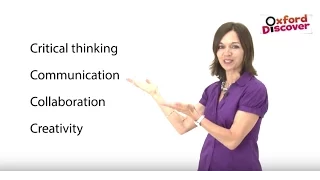
What are 21st Century skills?
21st century skills are essential competencies like critical thinking, communication, collaboration, and creativity that students need to succeed in their future studies, careers, and adult lives.
 29 min
VLOG Europa 2022 #1 - Copenhague
This vlog documents the beginning of a long-anticipated trip to Copenhagen, detailing the journey, initial impressions of the city, and the first day of sightseeing, all undertaken after significant p