Build & Sell AI SaaS Products (2 HOUR COURSE)
This is an AI-generated summary of “Build & Sell AI SaaS Products (2 HOUR COURSE)” — a 2 hr 22 min YouTube video by Nate Herk | AI Automation, published August 10, 2026. It condenses the full transcript into 10 key takeaways with clickable timestamps.
Summary
This video provides a comprehensive, live demonstration of building an AI SaaS product from initial ideation and pain point discovery through planning, development, branding, deployment, and strategic considerations for customer acquisition and scaling.
Key Points
- The video demonstrates a live build of an AI SaaS product, guiding viewers through ideation, planning, building, testing, authentication, payment processing, and domain connection to show how to turn an idea into a product and get customers.
- Initial ideation involves AI agents scraping vast amounts of primary and secondary data from various platforms to identify a critical market pain point, leading to the 'client proposal and handoff pack' product idea.
- Claude, acting as a project manager, creates a detailed build plan for the product's architecture (Next.js, Superbase, Stripe) and user experience, delegating tasks to sub-agents for parallel development.
- Codeex is used to develop the product's branding, including name, logo, color scheme, and a clear one-line promise, with further AI agent personas validating the messaging for trust and clarity.
- The application is deployed to GitHub and Vercel, with environment variables configured for Superbase and Stripe, and a custom domain is connected to ensure a professional and functional live product.
- The video highlights the importance of a well-designed onboarding and payment flow, demonstrating a free watermarked deck, paid subscription, and seamless integration with Stripe and Superbase.
- AI agents like Claude (for creative planning and orchestration) and Codeex (for execution, verification, and computer use) are leveraged with voice interaction to accelerate the development process.
- The entire SaaS sprint is structured around six key 'P's': Pain, Promise, Product, Plumbing, Packaging, and Proof, ensuring a comprehensive development and validation process.
- The development process emphasizes continuous verification and bug fixing, with Codeex rigorously testing the application for functionality and security vulnerabilities (OWASP 5.0) before deployment.
- Strategic customer acquisition focuses on validating the offer, starting with unscalable manual outreach, leveraging testimonials as a defensible moat, and using content creators for targeted marketing over cold ads.
Summarize any YouTube video, free
You just read an AI summary of this video. Paste any other YouTube link and get the key points with clickable timestamps in seconds — no signup, 5 free a day.
More Resources
More Summaries
 34 min
How I Built JARVIS with No Code (Tutorial w/ Lovable, ElevenLabs, n8n)
This video demonstrates how to build a sarcastic Jarvis-like AI assistant using Lovable.dev for the web interface, 11 Labs for conversational AI, and N8N for backend automation and tool calling, enabl
 8 min
8 minWeRecoverData's response 🤣
The video exposes how data‑recovery firm We Recover Data allegedly misleads customers with virtual‑office listings, fabricated success rates and fake reviews, and how the company’s inconsistent respon
 2 min
2 minWould you rather know the truth or be happy? Oxford PPE students discuss #oxforduniversity
This video explores the philosophical dilemma of choosing between a pleasant illusion and a harsh reality, using examples like a prisoner's vivid dream, Robert Nozick's Experience Machine, and Aristot
 5 min
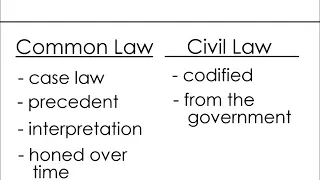
5 minCommon Law VS Civil Law
This video explains the fundamental differences between common law and civil law systems, highlighting how common law evolves through judicial precedent and public input, while civil law relies on cod
 7 min
7 minAspects of International Relations: International Political Economy | LSE
International Political Economy (IPE) is an interdisciplinary field that analyzes the complex interplay between markets and politics, offering a comprehensive understanding of global economic and poli