How to Get Bulletproof Tendons ft. Professor Keith Baar | Doctor Yaad Podcast
By Doctor Yaad
This is an AI-generated summary of “How to Get Bulletproof Tendons ft. Professor Keith Baar | Doctor Yaad Podcast” — a 1 hr 29 min YouTube video by Doctor Yaad, published October 11, 2025. It condenses the full transcript into 10 key takeaways with clickable timestamps.
Summary
Professor Keith Baar, a leading researcher, provides comprehensive guidance on optimizing tendon, ligament, and cartilage health for calisthenics athletes, focusing on injury prevention through understanding "jerk" mechanics, implementing specific low-intensity static loading protocols, utilizing targeted nutritional support, and adopting early, pain-free movement for effective injury rehabilitation.
Key Points
- Professor Keith Baar, a leading researcher in connective tissue adaptation, discusses optimal strategies for training and rehabilitating tendons, ligaments, and cartilage, particularly for calisthenics athletes.
- Connective tissue injuries are primarily caused by "jerk" (rapid changes in acceleration) during dynamic movements, rather than static holds, making calisthenics statics generally safer when progressed correctly.
- Incorporating a separate, low-intensity, low-jerk static loading session (e.g., 10 minutes at 50% body weight) in the morning, distinct from main training, provides an additional anabolic stimulus without significant catabolic effects.
- Tendons adapt faster than muscles but also lose collagen rapidly during immobilization, and their lack of delayed onset soreness makes overexertion difficult to detect, often leading to injuries in pre-damaged, fatigued tissue.
- Optimal tendon training involves short, intermittent loading sessions, as tendon cells respond maximally to about 10 minutes of stimulation and require 6-8 hours to resensitize, making protocols like 4x10 minutes spread over 24 hours highly effective for collagen synthesis.
- Static (isometric) holds are superior to dynamic movements for increasing tendon strength and stiffness, as dynamic movements can increase tissue size but reduce stiffness, potentially raising injury risk.
- Early, pain-free loading and movement are crucial for injury rehabilitation, even immediately after surgery, as immobilization causes rapid collagen loss and hinders the fluid exchange necessary for healing.
- Nutritional support, specifically consuming 5-10g of hydrolyzed collagen or gelatin with 50-250mg of Vitamin C and leucine-rich whey protein 30-60 minutes before exercise, can enhance tendon stiffness, reactive strength, and collagen synthesis, with consistency being paramount.
- A low-jerk, slow-onset isometric protocol (3-5 seconds to load, 30-second hold, 3-5 seconds to unload, repeated 3-4 times daily without pain) should be followed for approximately eight weeks to effectively repair injured tissue and prevent chronic pain.
- Caution is advised with broad anti-inflammatory approaches like NSAIDs and ice baths, as some inflammation is essential for strong tissue production, and certain anti-inflammatory compounds like turmeric may have limited efficacy or even detrimental effects on tendon function.
Summarize any YouTube video, free
You just read an AI summary of this video. Paste any other YouTube link and get the key points with clickable timestamps in seconds — no signup, 5 free a day.
More Resources
More Summaries
 40 min
The Nobel Prize in False Assumptions
This video critiques the Nobel Prize in Economics, arguing that its recipients, primarily neoclassical economists, promote flawed models that ignore real-world economic complexities and historical cri
 21 min
The World's Biggest Scientific Journal Suspended From PubMed: What Went Wrong?
This video highlights significant issues with the scientific journal Scientific Reports, including duplicated images, fabricated data, and a lack of proper editorial oversight, leading to its suspensi
 15 min
Latest updates: condition of the victims, what was found on the perpetrator, and the status of th...
Polish authorities provide an update on the ongoing investigation into a terrorist attack by Artur Michał Oksiński, who killed nine people in Krakow and Ostrowiec Świętokrzyski before his death, detai
 16 min
How to Heal Your Gut in 2 Weeks (According to Science)
An elemental diet is a hypoallergenic, pre-digested liquid meal replacement that can heal the gut by removing food triggers and providing easily absorbable nutrients, offering significant benefits for
 3 min
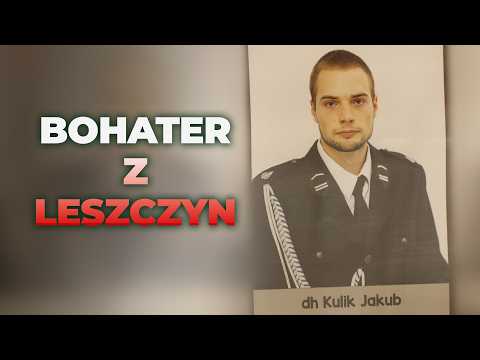
JAKUB KULIK – Firefighter, Soldier, Police Officer, and Above All, A HERO
This video conveys a message of support and pride for Jakub Kulig, a firefighter and former member of the Volunteer Fire Department (OSP) who was severely injured while saving others in Krakow, with h