Unit 2 Cells HONORS Concept 2 Notes *UPDATED*
This is an AI-generated summary of “Unit 2 Cells HONORS Concept 2 Notes *UPDATED*” — a 16 min YouTube video by It's Not Rocket Science, published June 29, 2020. It condenses the full transcript into 10 key takeaways with clickable timestamps.
Summary
This video explains cell transport mechanisms, detailing how cells maintain homeostasis by regulating the movement of substances across their selectively permeable membranes through both passive processes (diffusion, facilitated diffusion, osmosis) and active processes (molecular pumps, endocytosis, exocytosis).
Key Points
- Homeostasis is an organism's critical need to maintain stable internal conditions through dynamic equilibrium, regulating various factors within specific ranges.
- Feedback mechanisms, both positive (amplifying a response, like childbirth) and negative (countering a response to return to a set point, like thermoregulation), are essential for maintaining homeostasis.
- At the cellular level, homeostasis is maintained by the selectively permeable cell membrane, which controls what enters and exits the cell.
- The cell membrane's selective permeability allows small, nonpolar, hydrophobic, or neutral molecules (and small amounts of water) to pass easily, while larger or polar molecules require assistance.
- Passive transport, which includes simple diffusion, facilitated diffusion, and osmosis, moves substances from areas of high concentration to low concentration without requiring cellular energy.
- Active transport requires cellular energy (ATP) to move substances against their concentration gradient, from areas of low concentration to high concentration.
- Molecular pumps are a type of active transport that use protein channels to move specific molecules against their gradient, while endocytosis brings substances into the cell and exocytosis expels them using vesicles.
- Osmosis specifically refers to the simple diffusion of water across the cell membrane, moving from an area of high water concentration (low solute) to low water concentration (high solute).
- Cells placed in hypertonic solutions will shrivel as water leaves, hypotonic solutions will swell as water enters, and isotonic solutions will maintain their size as water moves equally.
- Endocytosis includes phagocytosis (cell eating solids) and pinocytosis (cell drinking liquids), both involving the engulfment of substances into vesicles.
Summarize any YouTube video, free
You just read an AI summary of this video. Paste any other YouTube link and get the key points with clickable timestamps in seconds — no signup, 5 free a day.
More Resources
More Summaries
 3 min
3 minEar Organ of Corti - Condensed Version
This video details the structure and function of the organ of Corti within the cochlea, explaining how it converts sound vibrations into neural impulses that the brain interprets as sound.
 1 min
1 min【玩老外系列】Do you speak English ? 都話佐唔識英文咯
This video humorously depicts a customer's struggle to order scallion chicken at a restaurant where the staff claims not to speak English or Chinese, only to have the order fulfilled by a white employ
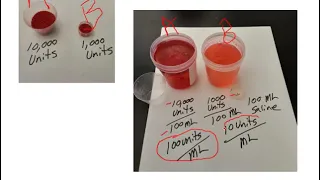 41 min
Introduction to Pharmacology Math for Surgical Technologists
This video provides an overview of various medication supply methods, including milligrams per milliliter, units, percentages, and ratios, explaining their concentrations and the critical importance o
 17 min
KCET 2026 Document Verification Started 🚨 No Verification = No Counselling
The video explains the UGCT 2026 document verification process, emphasizing the need to book a slot, gather clause-specific documents, and complete verification between May 11‑22 to avoid missing admi
 29 min
$950K/Month on TikTok Shop - How a Nurse Did It
Ally, known as "Just Another Nurse," transformed from a skeptical nurse to a highly successful TikTok Shop affiliate, achieving nearly $1 million in monthly sales and $6.1 million in total GMV by mast