The ONLY IELTS Reading Course You Need 2026
This is an AI-generated summary of “The ONLY IELTS Reading Course You Need 2026” — a 1 hr 59 min YouTube video by IELTS Advantage, published July 22, 2023. It condenses the full transcript into 10 key takeaways with clickable timestamps.
Summary
This comprehensive guide to IELTS reading provides band 9 strategies, tips, and a detailed walkthrough to help students understand the test format, improve reading skills, manage time effectively, and achieve a high score.
Key Points
- IELTS Academic and General Training reading tests share question types and strategies, featuring three progressively difficult sections that require strategic time allocation.
- High-scoring students manage their time by allocating less to easier sections and more to difficult ones, completing the test efficiently due to superior reading ability and practiced strategies.
- Band 9 students develop and memorize separate strategies for each question type, focusing on actively improving their weaknesses rather than relying on generic time management tips.
- The IELTS reading test is fundamentally a vocabulary test, necessitating a wide-ranging vocabulary and the ability to infer word meanings from context.
- Active reading, which involves noting new words, practicing guessing meanings, and working on specific weaknesses like spelling or grammar, is crucial for significant improvement over passive reading.
- The ultimate Band 9 strategy involves taking real practice tests under exam conditions, meticulously analyzing incorrect answers to identify patterns of weakness (e.g., vocabulary, spelling, specific question types), and then dedicatedly working to overcome them.
- It is critical to use only official practice tests from British Council, IDP, or Cambridge English, as unofficial or 'fake' tests can be unreliable and detrimental to preparation.
- For True/False/Not Given questions, students should ignore prior knowledge, identify qualifying words, and confidently determine 'not given' when insufficient information is provided in the text.
- Mastering core reading skills—skimming for general meaning, scanning for specific information, and especially close reading for detailed comprehension—is essential, with an emphasis on knowing when and how to apply each skill.
- When approaching Matching Headings questions, it is most effective to tackle them first in a section, create a concise heading for each paragraph based on its general meaning before reviewing the provided options, and then match your summary to the best fit.
Summarize any YouTube video, free
You just read an AI summary of this video. Paste any other YouTube link and get the key points with clickable timestamps in seconds — no signup, 5 free a day.
More Resources
More Summaries
 15 min
IELTS Reading Band 9 in 4 Steps (Simpler Than You Think)
This video outlines a four-step system for IELTS reading improvement, emphasizing working smart by mastering strategies, analyzing weaknesses, working on those weaknesses, and dedicating sufficient ti
 15 min
Dr Shashi Tharoor MP - Britain Does Owe Reparations
The speaker argues that Britain owes reparations to its former colonies, particularly India, for the immense economic exploitation, human suffering, and lasting damage inflicted during centuries of co
 24 min
mod01lec01 - Introduction to Environmental Governance
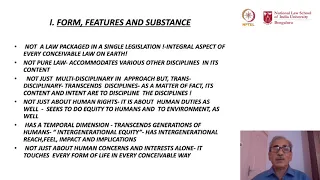
This video introduces the unique, multidisciplinary, and evolving field of Environment and Natural Resources Law, exploring its foundational principles, global interconnectedness, and diverse interpre
 8 hr 43 min
9 HOURS Price Action COURSE! The ONLY Technical Analysis Video You Need (Beginner to Advanced PRO)
This video provides a comprehensive guide to understanding and applying market structure breaks, entry zones, chart patterns, and various entry techniques, including order blocks, imbalances, Fibonacc
 1 min
Mensagem Vernon Bake sobre Ética e Conduta
The video is extremely short, consisting only of music and an unintelligible sound, offering no discernible content for summarization.