Inheritance: Dihybrid Crosses | A-level Biology | OCR, AQA, Edexcel
This is an AI-generated summary of “Inheritance: Dihybrid Crosses | A-level Biology | OCR, AQA, Edexcel” — a 15 min YouTube video by Launchpad Learning, published July 15, 2019. It condenses the full transcript into 9 key takeaways with clickable timestamps.
Summary
This video explains dihybrid crosses, which involve the inheritance of two different genes simultaneously, using pea plants as an example to illustrate how seed color and seed shape are passed down through generations and result in predictable phenotypic ratios.
Key Points
- Dihybrid inheritance studies the simultaneous inheritance of two different genes or characteristics, each determined by a gene on a separate chromosome.
- In pea plants, seed color (yellow/green) and seed shape (round/wrinkled) are used as an example, with yellow and round being dominant traits.
- Pure breeding parents for a dihybrid cross would have genotypes like YYRR (yellow, round) and yyrr (green, wrinkled).
- When pure breeding parents are crossed, the F1 generation consists of offspring that are heterozygous for both traits (e.g., YyRr), and all display the dominant phenotypes (yellow and round).
- To produce the F2 generation, two individuals from the F1 generation are crossed.
- A Punnett square for the F2 generation, using the four gamete types from each parent, reveals a variety of genotypes.
- The F1 generation (YyRr) produces four types of gametes: YR, Yr, yR, and yr.
- This 9:3:3:1 phenotypic ratio is a consistent outcome for dihybrid crosses involving independently assorting genes, regardless of the specific traits studied.
- The F2 generation exhibits a phenotypic ratio of 9:3:3:1, meaning 9 parts are dominant for both traits, 3 parts are dominant for the first and recessive for the second, 3 parts are recessive for the first and dominant for the second, and 1 part is recessive for both traits.
Summarize any YouTube video, free
You just read an AI summary of this video. Paste any other YouTube link and get the key points with clickable timestamps in seconds — no signup, 5 free a day.
More Resources
More Summaries
 5 min
5 minMeasuring Speed of Sound - Oscilloscope - GCSE Physics
This video explains how an oscilloscope displays sound waves as electrical signals over time and details a method for measuring the speed of sound using two microphones connected to an oscilloscope.
 3 min
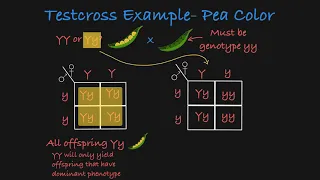
3 minTestcross Explained
This video explains how to use a test cross, a genetic method, to determine the unknown genotype of an organism that exhibits a dominant phenotype.
 1 min
1 min5 Simple Ways to Show Real Love to Your Parents ❤️💯#shorts #parents #family #gratitude
This video outlines five key behaviors children should avoid to show respect and gratitude towards their parents, emphasizing character, discipline, and the importance of returning love.
 21 min
Should you text your sp while manifesting them?
The video clarifies that whether one texts a specific person (SP) during manifestation is irrelevant to the outcome, emphasizing that true manifestation stems from one's internal assumptions and "God-
 3 min
3 minComo Hacer un Electroimán Casero (Proyecto de Física)
The video is a brief 32‑second montage of music accompanied by repeated thank‑you messages.