Oral Diagnosis | Developmental Disturbances of the Lips & Palate | INBDE, ADAT
This is an AI-generated summary of “Oral Diagnosis | Developmental Disturbances of the Lips & Palate | INBDE, ADAT” — a 17 min YouTube video by Mental Dental, published June 3, 2024. It condenses the full transcript into 8 key takeaways with clickable timestamps.
Summary
This video provides an overview of developmental anomalies affecting the lips and palate, including cleft lip, cleft palate, congenital lip pits, double lip, and granulomatous colitis, along with an explanation of various melanocytic lesions such as ephelis, melanotic macules, and melanocytic nevi.
Key Points
- Cleft lip, the most common facial birth defect, results from the failure of fusion between the medial nasal and maxillary prominences, leading to feeding and speech difficulties.
- Cleft palate, a failure of fusion of the palatal shelves, is more common in girls and can manifest as incomplete or complete, often causing significant dental anomalies like missing incisors and impacted canines.
- Congenital lip pits are rare bilateral depressions, almost exclusively on the lower lip, and are associated with VanderWoude Syndrome when combined with cleft lip or palate.
- Double lip is a developmental anomaly characterized by hypertrophy of the inner lip, creating an extra fold of tissue, most often in the upper lip, which can be surgically corrected.
- Granulomatous colitis is a chronic inflammatory condition causing swollen, firm, cracked, and red lips, which may be associated with Melkersson-Rosenthal Syndrome.
- An ephelis, or freckle, is a benign, flat, light brown lesion less than 5mm, found on sun-exposed skin and lips, requiring no treatment.
- A melanotic macule is a benign, flat, pigmented lesion of the oral mucosa, often congenital and larger than a freckle, with multiple macules potentially indicating serious conditions like Peutz-Jeghers Syndrome.
- A melanocytic nevus, or mole, is a benign proliferation of pigment-producing cells; however, oral mucosal nevi, though rare, should be excised due to the inability to clinically differentiate them from malignant oral melanoma.
Summarize any YouTube video, free
You just read an AI summary of this video. Paste any other YouTube link and get the key points with clickable timestamps in seconds — no signup, 5 free a day.
More Resources
More Summaries
 30s
30sMobile 📲📱 #coimbatore #tamilnadunews #chennai #tech #tamilnadu #tamil #tamilnews #tamilshorts #tvk
The video outlines the initial steps and details for a scheme involving family members, emphasizing how to follow the process using a mobile platform.
 42 min
Hydrocarbons Chemistry Class 11 Alkanes | NEET JEE | Part-1
This video introduces the chemistry of alkanes, detailing their general characteristics, classification as paraffins due to low reactivity, and exploring two main types of isomerism: chain isomerism a
 30 min
LIFE OF A DIRECTOR IN AMERICA | Filming, film school & a holiday dinner 🥘❤️
The creator shares her experiences in film school, detailing her passion for producing and sound design, the challenges of scriptwriting and production, and personal reflections on ADHD and relationsh
 6 min
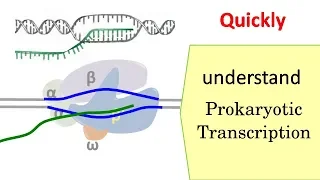
6 minTranscription in prokaryotes
This video details the process of transcription in prokaryotes, explaining the structure of bacterial RNA polymerase, the stages of initiation including abortive initiation, and the two mechanisms of
 15 min
They Can’t Reject You… Or Choose You
The video asserts that external rejection is impossible because others only perceive their own version of you, emphasizing that true rejection or acceptance can only come from within yourself, leading