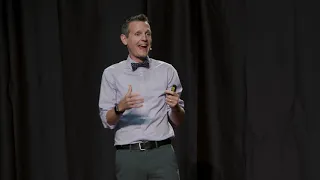
We’re Doing Dying All Wrong | Ken Hillman | TEDxSydney
By TEDx Talks · more summaries from this channel
This is an AI-generated summary of “We’re Doing Dying All Wrong | Ken Hillman | TEDxSydney” — a 14 min YouTube video by TEDx Talks, published June 14, 2016. It condenses the full transcript into 10 key takeaways with clickable timestamps.
Summary
The talk examines how modern medicine has turned end‑of‑life care for the elderly into a hospital‑driven process, argues for recognizing frailty and patient wishes, and proposes community‑based solutions to allow dignified dying at home.
Key Points
- In the past, elderly patients like the speaker’s grandfather could die comfortably at home, but today most are funneled through hospitals and intensive care units.
- The final years of life for the very elderly are less a medical problem and more a need for social and practical support to ensure comfort and dignity.
- Advances in technology, specialization, and intensive care have increased hospital capacity and the number of older patients receiving aggressive treatment near the end of life.
- The speaker’s own experience with his mother’s repeated hospital admissions illustrates how the “conveyor belt” system often deprives patients of choice and honest communication about dying.
- Most people prefer to die at home, but the majority still die in acute hospitals, highlighting a mismatch between patient wishes and current care practices.
- Diagnosing a single disease in older patients is inadequate because multiple chronic conditions combine into a state of frailty that medicine cannot cure.
- Recognizing frailty and predicting limited life expectancy can be aided by simple tools, such as the “crystal tool,” which use age and frailty scores.
- Doctors are uncomfortable discussing death with elderly patients, yet honest conversations are essential to empower patients and families to make informed choices.
- Long‑term solutions involve strengthening primary‑care roles, advance care directives, and community resources like home‑based support and respite care.
- The speaker calls for greater honesty about the limits of modern medicine and urges individuals to take control of their own end‑of‑life decisions.
Summarize any YouTube video, free
You just read an AI summary of this video. Paste any other YouTube link and get the key points with clickable timestamps in seconds — no signup, 5 free a day.
More Resources
More Summaries
 11 min
Future Ready Schools | Jim McKenzie | TEDxGainesville
The video argues that the American educational system is at a critical juncture, needing to be reimagined and courageously transformed from its outdated industrial-era model to one that prepares stude
 13 min
Combine Passion and Skill: A Conscious Approach to Creating Your Dream Career | Amy Tseng | TEDxUofM
A technical director at Walt Disney Animation Studios explains how her role bridges the gap between art and technology in creating animated films, encouraging others to combine their diverse passions
 17 min
How culture creates or kills innovation | Dirk Schlünz | TEDxNuremberg
This video explores the essential elements of fostering an innovative culture within an organization, emphasizing the importance of positive interactions, meticulous execution, and supportive leadersh
 1 hr 27 min
The AI Safety Expert: These Are The Only 5 Jobs That Will Remain In 2030! - Dr. Roman Yampolskiy
Dr. Roman Yampolskiy warns that the rapid advancement of AI, particularly towards superintelligence, poses an existential threat to humanity due to our inability to ensure its safety and control, whil
 2 hr
2 hrChatGPT Whistleblower: They Offered Me $2m To Keep Quiet, No One Is Ready For What's Coming!
Daniel Kokotajlo, a former OpenAI employee, discusses the urgent risks and potential catastrophic outcomes of rapid AI development, including human extinction and concentration of power, while also pr