52 Minute Risk Management Masterclass from a $100,000,000 Trader
By TheOneLanceB
This is an AI-generated summary of “52 Minute Risk Management Masterclass from a $100,000,000 Trader” — a 52 min YouTube video by TheOneLanceB, published July 15, 2026. It condenses the full transcript into 10 key takeaways with clickable timestamps.
Summary
This video provides a comprehensive guide to trading risk management, emphasizing that it's a personal, evolving process of balancing aggression and defense to maximize long-term expected value while avoiding unacceptable outcomes, rather than simply eliminating risk.
Key Points
- Risk management is a personal and unique set of processes and rules designed to maximize the odds of achieving trading goals while minimizing the odds of unacceptable outcomes, and it is not about eliminating risk entirely.
- What constitutes an 'unacceptable outcome' varies greatly among individuals based on their financial situation, emotional tolerance, obligations, and goals, making universal risk models ineffective.
- Most traders overestimate their risk tolerance, and experiencing significant drawdowns can shatter confidence and impair decision-making, highlighting the importance of conservative risk management.
- The concept of 'risk of ruin' extends beyond account blow-up to include losses large enough to destroy confidence, impair decision-making, or create chronic stress.
- Recovery from significant drawdowns is mathematically challenging, as a 50% loss requires a 100% gain to break even, underscoring the danger of large losses and leverage.
- Defensive risk management involves setting hard limits and guardrails, such as daily/weekly drawdown limits, mandatory cooling-off periods, and strict rules on position sizing and aggregate exposure.
- Stop-losses, whether mental or hard, are crucial for defining when a trade thesis is invalidated, allowing for objective risk quantification and proper position sizing.
- Position sizing is arguably the most powerful risk management tool, determining the survivability of adverse events and mistakes, and should be more conservative for short positions due to theoretically unlimited downside.
- Wiring out profits is a critical, often overlooked, defensive tool that secures gains, creates psychological stability, and protects against catastrophic events by removing capital from direct trading risk.
- Offensive risk management involves intelligently allocating risk to capitalize on high-conviction opportunities, meaning increasing exposure when the edge is significant, rather than treating all setups equally.
Summarize any YouTube video, free
You just read an AI summary of this video. Paste any other YouTube link and get the key points with clickable timestamps in seconds — no signup, 5 free a day.
More Resources
More Summaries
 15 min
how to change your life in 90 days | enter your winter arc and *actually* LEVEL UP by 2025
The video explains the concept of a 'winter arc' as a period from October 1st to the new year where individuals can focus on self-improvement, discipline, and goal achievement to emerge as their best
 1 hr 8 min
Intro to The Odyssey and Homer
This lecture provides an in-depth introduction to Homer's The Odyssey, exploring its historical context, mysterious authorship, thematic differences from The Iliad, complex characters, the significant
 1 hr 1 min
Major Domains of The Earth FULL CHAPTER | Class 6 Geography Chapter 4 | UPSC Preparation
This video explains the major domains of the Earth: the lithosphere (land), hydrosphere (water), atmosphere (air), and biosphere (life), detailing their characteristics, components, and importance for
 1 hr 42 min
The First Emperor of China
The video explores the life, reign, and enduring legacy of Qin Shi Huang, the first emperor of unified China, detailing his ruthless ambition, military conquests, construction of monumental projects l
 5 min
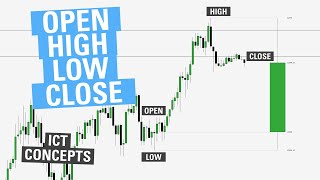
5 minOpen High Low Close (OHLC / OLHC) - ICT Concepts
This video explains how to identify trading opportunities by analyzing the formation of Open High Low Close (OHLC) and Open Low High Close (OLHC) candle patterns in relation to a 'draw on liquidity' a