11 15 22 LIFT Off Presented by Thermo Calc
By LIFT
This is an AI-generated summary of “11 15 22 LIFT Off Presented by Thermo Calc” — a 57 min YouTube video by LIFT, published November 18, 2022. It condenses the full transcript into 10 key takeaways with clickable timestamps.
Summary
The webinar showcases how Lyft’s national manufacturing initiative leverages Thermo‑Calc’s CALPHAD tools within an ICME framework to accelerate advanced alloy development, reduce experimental costs, and build a skilled workforce, while outlining the software’s capabilities, database considerations, and support resources.
Key Points
- Lyft is a non‑profit public‑private partnership that serves as a national manufacturing innovation institute to advance U.S. advanced manufacturing through technology and talent development.
- Lyft’s four technology pillars—ICME, advanced alloy and process development, multi‑material joining, and agile manufacturing such as additive manufacturing and cold spray—guide its research and industry collaborations.
- The organization runs talent programs, including the Ignite Manufacturing curriculum for high‑school students and certified training for adults, to develop a skilled manufacturing workforce.
- Thermo‑Calc databases are built from binary and ternary subsystem data, allowing accurate extrapolation to higher‑order alloys, though missing entries can reduce confidence in predictions.
- Integrating CALPHAD predictions into ICME workflows enables engineers to simulate additive manufacturing, heat treatment, welding, and other processes without costly experiments, accelerating design cycles by up to five times.
- Case studies demonstrated predicting temperature‑dependent specific heat for stainless steel in laser additive builds, modeling precipitation evolution and yield strength in Inconel 718, and optimizing hypersonic ceramic composites by raising liquidus temperatures.
- The platform provides Python and MATLAB APIs (with legacy Fortran support) to couple thermodynamic calculations with finite‑element, CFD, or machine‑learning tools for comprehensive material‑process‑performance modeling.
- Thermo‑Calc can compute location‑specific phase diagrams, predict yield stress, thermal expansion, density, and phase fractions for alloys like Al 6063 when supplied with exact chemistry and processing history.
- Thermo‑Calc’s CALPHAD software fills material property data gaps by using phase‑based thermodynamic models to predict temperatures, phase fractions, and thermophysical properties for any alloy composition.
- Hardness prediction is feasible for precipitation‑strengthened alloys using a yield‑strength model, but it does not apply to bainitic or martensitic structures, and users are encouraged to contact Lyft for support.
Summarize any YouTube video, free
You just read an AI summary of this video. Paste any other YouTube link and get the key points with clickable timestamps in seconds — no signup, 5 free a day.
More Resources
More Summaries
 20 min
The Biology of Skin Color | HHMI BioInteractive Video
Human skin color evolved through natural selection as a balance between protecting against UV‑induced folate loss and allowing enough UVB for vitamin D synthesis, leading to the global variation we se
 3 min
3 minI Refused to Return to the Immortal Realm With My Wife #manhwa #recap #drama
A man, betrayed in a past life by his immortal wife who left him to die while she ascended with her savior and son, gets a second chance to change his fate and find his own path.
 4 min
4 minMouse cage enrichment
The video discusses how researchers design and evaluate goal-oriented environmental enrichment to expand functional space and improve the welfare of laboratory mice.
 29 min
ICT FOR DUMMIES | Liquidity PT. 2 EP. 7
This video, "ICT for Dummies Episode 7: Liquidity Part Two," details various high-probability liquidity pools, including session highs/lows, previous day highs/lows, low resistance liquidity, equal hi
 6 min
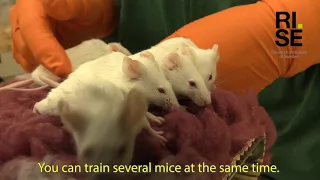
6 minMice at RISE
The video demonstrates humane mouse handling and training techniques that build trust, enable stress‑free procedures like blood sampling and dosing, and improve animal welfare in research.