A doctor's touch - Abraham Verghese
By TED-Ed · more summaries from this channel
This is an AI-generated summary of “A doctor's touch - Abraham Verghese” — a 18 min YouTube video by TED-Ed, published August 16, 2013. It condenses the full transcript into 10 key takeaways with clickable timestamps.
Summary
The speaker advocates for the critical importance of the physical examination and human touch in medicine, arguing that over-reliance on technology leads to missed diagnoses and the loss of a transformative ritual essential for the patient-physician relationship.
Key Points
- The speaker recounts a tragic case of a 40-year-old woman whose widely metastasized breast cancer was missed by multiple healthcare institutions due to a lack of thorough physical examination.
- He argues that shortcutting the physical exam and over-relying on diagnostic tests not only leads to missed early diagnoses but also diminishes a transformative ritual essential to the patient-physician relationship.
- The speaker concludes that the human hand's ability to touch, comfort, diagnose, and treat represents the most crucial innovation in medicine, emphasizing the enduring value of this ritual in an increasingly technological age.
- The power of observation and deduction in medicine is illustrated through Sir Joseph Bell, the inspiration for Sherlock Holmes, who could discern extensive patient details through keen sensory examination.
- Historically, innovations like Leopold Auenbrugger's percussion and René Laennec's stethoscope in the late 1700s and early 1800s marked a significant shift towards physicians actively looking inside the body for diagnosis.
- The speaker contrasts the traditional image of a physician at the patient's bedside with modern medical rounds, where discussions often occur remotely, focusing on digital "i-patients" rather than the actual person.
- An anecdote reveals that a breast cancer patient chose a local oncologist over a renowned cancer center because the local doctor consistently performed a thorough physical exam, highlighting the deep importance of touch and attentiveness to patients.
- The speaker developed a method for chronic fatigue patients, dedicating an entire visit to listening to their story and a separate, thorough visit to the physical exam, which built profound trust and allowed him to "earn the right" to guide their care.
- Anthropologists helped the speaker understand the physical exam as a classic ritual of transformation, where the patient's vulnerability and the physician's touch create a powerful bond that should not be shortchanged.
- In end-of-life care, particularly with HIV patients, the physical exam, even when diagnostically irrelevant, served as a profound ritual to convey a singular message of unwavering presence, commitment, and non-abandonment from the physician.
Summarize any YouTube video, free
You just read an AI summary of this video. Paste any other YouTube link and get the key points with clickable timestamps in seconds — no signup, 5 free a day.
More Resources
More Summaries
 26 min
Med Establishment STUNNED By Brain Discovery THAT CHANGES EVERYTHING
Medical student Shaylen Bott discovered that cerebrospinal fluid in the human brain drains into the lymphatic system, challenging long-held anatomical beliefs and opening new avenues for understanding
 13 min
I Asked an Arab Muslim About Spain… I Wasn’t Ready for His Answer
The video describes the current situation in Spain as a full-blown invasion by fighting-age men, driven by radical intent to destroy rather than contribute, warning of severe consequences due to gover
 1 hr 40 min
Psychiatrist Hurt by Drugs He Prescribed Challenges the Whole Profession
Dr. Mark Horowitz, a psychiatrist who endured severe antidepressant withdrawal, discusses his groundbreaking book, "The Maudsley Deprescribing Guidelines," which aims to educate clinicians and patient
 1 hr 7 min
Live | Same Sex Marriage Case | Supreme Court of India | CJI Chandrachud with Constitutional Bench
The Solicitor General argues that defining marriage for same-sex couples is a complex legislative matter, not a judicial one, due to its extensive social, legal, and religious ramifications, the need
 24 min
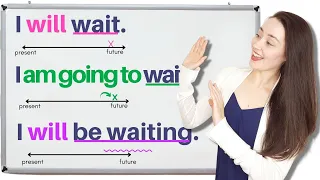
Future Simple & Future Continuous | English Tenses | will? be going to? will be going?
This comprehensive lesson thoroughly explains the grammatical structures and diverse applications of both the future simple and future continuous tenses in English, including their differences and spe