"Software Fundamentals Matter More Than Ever" — Matt Pocock
By AI Engineer
This is an AI-generated summary of “"Software Fundamentals Matter More Than Ever" — Matt Pocock” — a 18 min YouTube video by AI Engineer, published April 23, 2026. It condenses the full transcript into 10 key takeaways with clickable timestamps.
Summary
This video argues that software fundamentals and good codebases are more crucial than ever in the age of AI, as they enable developers to effectively leverage AI as a tactical programmer while focusing on strategic design and architecture.
Key Points
- The "specs-to-code" movement, which advocates for generating code from specifications and ignoring the code itself, consistently produces poor quality and unmanageable code.
- Good code is defined as easy to understand and modify, while bad code (complex, high entropy) is hard to change without introducing bugs, making software fundamentals essential.
- Contrary to the belief that code is cheap, bad code is now the most expensive it has ever been because it prevents leveraging the full potential of AI.
- To overcome communication barriers with AI, developers should use a "Grill Me" skill to force the AI to relentlessly interview them, ensuring a shared understanding and design concept.
- Establishing a "ubiquitous language" (from Domain-Driven Design) through a shared terminology document helps both developers and AI communicate more precisely and reduce verbosity.
- Implementing Test-Driven Development (TDD) forces the AI to take small, deliberate steps, using feedback loops like static types and automated tests effectively, preventing it from generating too much code at once.
- Good, testable codebases feature "deep modules" with extensive hidden functionality behind simple interfaces, which are easier for AI to navigate and understand than shallow, complex module structures.
- Developers should strategically design the simple interfaces of deep modules, treating them as "gray boxes," and delegate the complex implementation details to the AI, saving mental effort.
- It is critical to continuously invest in the design of the system every day, focusing on strategic architectural decisions and module interfaces, rather than divesting from design.
- AI functions best as a tactical programmer, making code changes, while the human developer acts as the strategic leader, guiding the design and ensuring codebase quality using fundamental software engineering skills.
Summarize any YouTube video, free
You just read an AI summary of this video. Paste any other YouTube link and get the key points with clickable timestamps in seconds — no signup, 5 free a day.
More Resources
More Summaries
 18 min
Jev CEO: I made ChatGPT, now I'm building what's next
Tiago Almeida, a co-author of OpenAI's major models, argues that the current AI era, defined by RLHF, excels at human-in-the-loop assistance but is fundamentally flawed for reliable automation, necess
 1 min
1 minThe Monty Hall Problem - Nuclear Engineer Reacts to Zack D. Films
This video explains the Monty Hall problem using a bomb-defusal analogy, demonstrating that switching your initial choice after new information is revealed significantly increases your probability of
 13 min
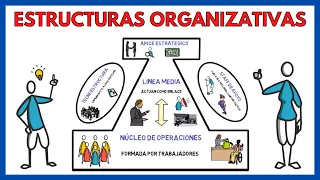
ESTRUCTURAS ORGANIZATIVAS de una EMPRESA ➕ Ejemplos | Economía de la empresa 147#
This video explains the concept of organizational structures, detailing their purpose, key elements, and various types with their respective advantages and disadvantages, illustrated with real-world c
 1 min
1 minCan You Change Maths Basic to Standard? 🤔 Full CBSE Rule Explained #cbseboard #cbse #class10th
The video explains that students can change their math paper choice between Standard and Basic for the second board exam and how the marks will be reflected in their final results.
 15 min
WWE 2K26 Women’s Elimination Chamber Match Full Highlights
This video showcases an intense Elimination Chamber match featuring Charlotte, Nikki Bella, AJ Lee, Jade Cargill, Rhea Ripley, and Bianca Belair, culminating in Rhea Ripley's hard-fought victory via s