Ear Organ of Corti - Condensed Version
This is an AI-generated summary of “Ear Organ of Corti - Condensed Version” — a 3 min YouTube video by animacionesplus, published August 4, 2010. It condenses the full transcript into 9 key takeaways with clickable timestamps.
Summary
This video details the structure and function of the organ of Corti within the cochlea, explaining how it converts sound vibrations into neural impulses that the brain interprets as sound.
Key Points
- The organ of Corti, located within the spiral, three-chambered cochlea, serves as the receptor organ of hearing.
- It extends for approximately 2.5 turns around a bony pillar called the modiolus and is housed within the scala media, which is filled with endolymph.
- Key structures within the organ of Corti include the tectorial membrane, basilar membrane, and two types of hair cells: inner and outer.
- Inner hair cells account for 95% of afferent fibers, while outer hair cells primarily receive efferent input, and tip links connect stereocilia to amplify mechanical forces.
- Sound enters the cochlea when the stapes transfers force from the tympanic membrane to the oval window, with high frequencies encoded at the base and low frequencies at the apex, establishing a tonotopic map.
- The manner in which the basilar membrane vibrates in response to sound is crucial, creating a shearing force between the tectorial and basilar membranes.
- A unique potassium concentration gradient, with high potassium at the hair cell's apex and low at its base, facilitates both depolarization (potassium influx) and repolarization (potassium efflux).
- Hair cells, positioned between these membranes, are stimulated by this shearing force, converting mechanical vibrations into neural impulses.
- These neural impulses are subsequently transmitted to the brain, which then interprets them as sound.
Summarize any YouTube video, free
You just read an AI summary of this video. Paste any other YouTube link and get the key points with clickable timestamps in seconds — no signup, 5 free a day.
More Resources
More Summaries
 41 min
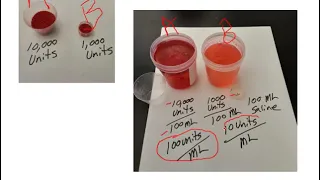
Introduction to Pharmacology Math for Surgical Technologists
This video provides an overview of various medication supply methods, including milligrams per milliliter, units, percentages, and ratios, explaining their concentrations and the critical importance o
 16 min
Unit 2 Cells HONORS Concept 2 Notes *UPDATED*
This video explains cell transport mechanisms, detailing how cells maintain homeostasis by regulating the movement of substances across their selectively permeable membranes through both passive proce
 29 min
$950K/Month on TikTok Shop - How a Nurse Did It
Ally, known as "Just Another Nurse," transformed from a skeptical nurse to a highly successful TikTok Shop affiliate, achieving nearly $1 million in monthly sales and $6.1 million in total GMV by mast
 1 min
1 min【玩老外系列】Do you speak English ? 都話佐唔識英文咯
This video humorously depicts a customer's struggle to order scallion chicken at a restaurant where the staff claims not to speak English or Chinese, only to have the order fulfilled by a white employ
 19 min
Dave Rubin “I Know The Actual Reason Megyn Kelly Changed…”
This video discusses the perceived ideological shifts and potential cynicism of media personalities like Tucker Carlson and Megyn Kelly, particularly in their commentary on Israel and related issues,