Your Brain: Who's in Control? | Full Documentary | NOVA | PBS
This is an AI-generated summary of “Your Brain: Who's in Control? | Full Documentary | NOVA | PBS” — a 53 min YouTube video by NOVA PBS Official, published June 1, 2023. It condenses the full transcript into 10 key takeaways with clickable timestamps.
Summary
This video explores the complex workings of the human brain, revealing that our sense of self, decision-making, and actions are often driven by unconscious processes and external influences rather than solely by conscious control.
Key Points
- Understanding the unconscious workings of the brain can lead to greater self-awareness and a better understanding of what we can ultimately control.
- Sleepwalking demonstrates how parts of the brain can be active, allowing for complex behaviors, while the prefrontal cortex, responsible for decision-making and self-awareness, remains asleep.
- Anesthesia shows that altering communication between brain regions, particularly the thalamus, can lead to a loss of consciousness.
- Split-brain surgery reveals that the two hemispheres of the brain can function semi-independently, suggesting that our sense of a unified self might be an illusion.
- Emotions, influenced by both internal states and the reactions of others, play a significant role in decision-making, guiding behavior and social interaction.
- Traumatic experiences can have profound and lasting effects on brain biology, potentially influencing subsequent generations through epigenetic changes.
- The brain is a meaning-making machine that constructs a sense of self and agency, but this perception is influenced by a multitude of unconscious processes, social interactions, and even ancestral experiences.
- Our sense of agency and control over our actions is fragile and can be manipulated, suggesting that we may not always be the conscious authors of our choices.
- Creative activities like musical improvisation can involve deactivating the prefrontal cortex, allowing for spontaneous innovation by letting go of conscious self-monitoring.
- The brain is an incredibly complex organ responsible for our personality, thoughts, and feelings, yet much of its activity occurs outside of our conscious awareness.
Summarize any YouTube video, free
You just read an AI summary of this video. Paste any other YouTube link and get the key points with clickable timestamps in seconds — no signup, 5 free a day.
More Resources
More Summaries
 2 min
2 minHuman Nature | Trailer | NOVA | PBS
The video explores the revolutionary gene-editing technology CRISPR, highlighting its unprecedented ability to alter human DNA and the profound ethical dilemmas it poses regarding human enhancement, d
 25 min
Talking on Tuesday May 12
The video captures a candid conversation between two collaborators as they celebrate workshop sign‑ups, confront the challenges of marketing, writing a book, and procrastination, and explore reframing
 1 hr 14 min
12 things you should know about the Bible | Back 2 Basics | Kenneth Justin | Sunday Service
The sermon teaches that the Bible, God’s inspired word written in Hebrew, Greek, and Aramaic, must be studied through careful historical‑cultural exegesis using Jesus as the sole interpretive lens, re
 6 hr 36 min
Complete CUET Political Science in One Shot | Nichod Series | CUET Humanities 2026
This comprehensive YouTube video provides a marathon revision of the entire Political Science syllabus for the CUET exam, covering key concepts, historical events, and important dates from both textbo
 21 min
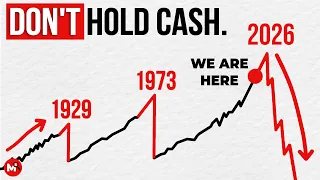
This Setup Only Happens Once Every 50 Years — It JUST Happened Again.
The video explains how the current 2026 economic conditions mirror the 1970s stagflation era and advises investors to position themselves in energy, defense, AI infrastructure, and real assets rather