Are you confused about health information? You're not alone | Lisa Fitzpatrick | TEDxMidAtlantic
By TEDx Talks · more summaries from this channel
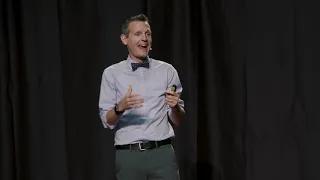
This is an AI-generated summary of “Are you confused about health information? You're not alone | Lisa Fitzpatrick | TEDxMidAtlantic” — a 12 min YouTube video by TEDx Talks, published June 29, 2016. It condenses the full transcript into 8 key takeaways with clickable timestamps.
Summary
This video addresses the widespread and costly problem of low health literacy, advocating for improved patient education through modern communication, addressing misinformation, and empowering individuals to actively seek and understand their health information.
Key Points
- Low health literacy is a widespread problem across all demographics, leading to confusion about health information and costing the healthcare system an estimated $238 billion annually due to increased utilization.
- The speaker, Dr. Lisa, created "Dr. Lisa on the Street" to engage directly with the public, revealing common misunderstandings about medical terms, conditions, and appropriate healthcare practices.
- Rumors and misinformation are powerful but often inaccurate channels for health information, as demonstrated by the public panic during the Ebola outbreak, underscoring the need for reliable information within these networks.
- Healthcare providers contribute to the problem by using outdated communication tools like fax machines and employing medical jargon instead of clear, patient-friendly language.
- Investing in health education is highly cost-effective, with research indicating that every dollar spent can save $25 in healthcare system costs.
- The case of "John" exemplifies how a lack of trust, poor patient-provider communication, and low health literacy can lead to severe health complications and emergency hospitalizations.
- To combat misinformation, individuals should verify health information before sharing it, and healthcare providers must adopt modern technology for effective patient communication.
- Patients are urged to take control of their health literacy by actively seeking suitable healthcare providers, avoiding gaps in care, and persistently asking questions to ensure full understanding of their medical conditions and treatments.
Summarize any YouTube video, free
You just read an AI summary of this video. Paste any other YouTube link and get the key points with clickable timestamps in seconds — no signup, 5 free a day.
More Resources
More Summaries
 14 min
We’re Doing Dying All Wrong | Ken Hillman | TEDxSydney
The talk examines how modern medicine has turned end‑of‑life care for the elderly into a hospital‑driven process, argues for recognizing frailty and patient wishes, and proposes community‑based soluti
 11 min
Future Ready Schools | Jim McKenzie | TEDxGainesville
The video argues that the American educational system is at a critical juncture, needing to be reimagined and courageously transformed from its outdated industrial-era model to one that prepares stude
 13 min
Combine Passion and Skill: A Conscious Approach to Creating Your Dream Career | Amy Tseng | TEDxUofM
A technical director at Walt Disney Animation Studios explains how her role bridges the gap between art and technology in creating animated films, encouraging others to combine their diverse passions
 31 min
Geo-Strategy Update #11: Things Fall Apart (Huang Resigns, FAA Shutdown, Bank Outages)
The speaker warns that elite incompetence, profit‑driven AI centralization, and recent leadership changes at Nvidia are eroding system redundancy and professionalism, leading to imminent infrastructur
 5 min
Understanding FERPA Compliance: Safeguarding Student Privacy
The Family Educational Rights and Privacy Act (FERPA) is a federal law designed to protect the privacy of student education records by granting parents and eligible students rights to access, correct,