Jean-Pierre Garnier Malet en el Observatoire du Réel. Esas Verdades Escondidas (EN FRANCÉS)
By Recopilatorio del Desdoblamiento del Tiempo
This is an AI-generated summary of “Jean-Pierre Garnier Malet en el Observatoire du Réel. Esas Verdades Escondidas (EN FRANCÉS)” — a 1 hr 11 min YouTube video by Recopilatorio del Desdoblamiento del Tiempo, published July 12, 2021. It condenses the full transcript into 10 key takeaways with clickable timestamps.
Summary
The speaker presents a controversial “doubling of time” theory linking ancient calendars, quantum physics, and spiritual cycles, claiming humanity is poised for a transformative era driven by hidden genetic origins, collective thought, and upcoming divine influences.
Key Points
- Recent scientific concepts like quantum superposition, antigravitational forces, and a proposed third particle are presented as evidence supporting the double‑time mechanism.
- This theory is tied to cycles such as the Mayan 5,130‑year calendar and a larger 24,840‑year precessional cycle, with each 2,000‑year avatar (the 12th being Jesus) shifting the double from future to past.
- The “doubling of time” theory asserts humans experience two simultaneous temporal layers—daytime creates potential futures while nighttime resolves them—shaping reality.
- Ultimately, the speaker argues that human consciousness follows hidden, programmed laws—encoded in ancient calendars, Greek letters, and quantum entanglement—rather than random chance, determining our destiny.
- A 1,080‑year cyclical pattern is said to culminate in a golden age and an incursion of divine beings, preceded by a 40‑day “quarantine” period for processing massive new information.
- The speaker claims modern humans are a hybrid species containing Neanderthal DNA introduced through ancient genetic manipulation, influencing our role in the upcoming transformation.
- The speaker warns that scientists discussing these ideas are marginalized, citing the case of Jean‑Pierre Petit, and announces a forthcoming bilingual scientific publication to legitimize the research.
- Controlling thoughts is emphasized because thoughts generate potentials that the nightly “double” solidifies, and collective mindset can mitigate crises, as illustrated by responses to Fukushima and Hiroshima.
- Children under seven and “Indigo” or future‑oriented individuals are described as possessing a protective “double” that can guide humanity through the rapid evolution.
- Ancient structures and engineering feats, including the pyramids, the Sphinx, and alleged Nile diversions, are cited as proof that early civilizations understood these cycles and forces.
Summarize any YouTube video, free
You just read an AI summary of this video. Paste any other YouTube link and get the key points with clickable timestamps in seconds — no signup, 5 free a day.
More Resources
More Summaries
 6 min
6 minGlobal Warming - The End Game | The Dr. Binocs Show | Best Learning Videos For Kids | Peekaboo Kidz
Global warming is the significant rise in Earth's average temperature due to human activities like burning fossil fuels and deforestation, leading to severe environmental consequences, but individual
 26 min
MAKE MANIFESTATION SIMPLE AGAIN PART 473
The video teaches how to manifest your desired reality by aligning your self-perception, thoughts, and internal dialogue with the version of yourself that already possesses what you seek, emphasizing
 1 min
1 minEverything in Fortnitemares in 60 Seconds...
The video provides a speculative overview of Fort Nightmares 2026 in Fortnite, detailing numerous new collaborations, sprites, items, map changes, and boss encounters.
 7 min
7 minExplanation video for Assignment #2 PESTLE - MGMT365
This video explains the requirements for an international business assignment focused on analyzing the PESTEL factors (Political, Economic, Sociocultural, Technological, Environmental, Legal) and thei
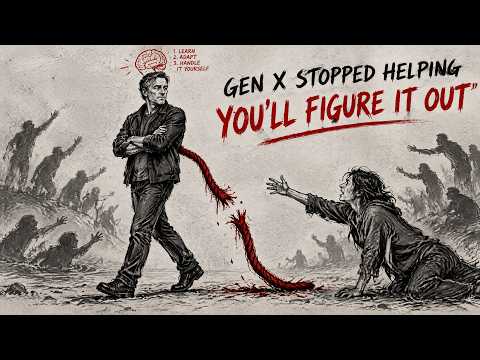 9 min
9 minGen X Didn't Stop Caring. They Stopped Rescuing. (Science Explains Why)
The video explains how Generation X’s unsupervised childhood taught them to value personal control over rescue, shaping a self‑reliant but seemingly cold adult behavior backed by neuroscience and soci