Substation equipment and their functions | Quick Revision | TheElectricalGuy
By Gaurav J - TheElectricalGuy · more summaries from this channel
This is an AI-generated summary of “Substation equipment and their functions | Quick Revision | TheElectricalGuy” — a 19 min YouTube video by Gaurav J - TheElectricalGuy, published March 23, 2023. It condenses the full transcript into 9 key takeaways with clickable timestamps.
Summary
The video provides a concise revision of substation equipment, explaining the purpose and operation of each component from lightning arrestors to power transformers.
Key Points
- Lightning arrestors are the first equipment seen in a substation and protect all downstream devices from lightning strikes and switching surges by providing a non‑linear resistance path to ground.
- Single ACSR conductors are named after animals to indicate their size, and they are used as droppers, busbars, and other conductors within the substation layout.
- Capacitive Voltage Transformers (CVTs) step down high line voltages to low levels for accurate metering, relay protection, and also enable power‑line carrier communication because of their internal capacitors.
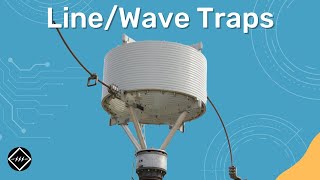
- Wave traps, also called line traps, function as low‑pass filters that block high‑frequency communication signals (40‑500 kHz) while allowing only the power‑frequency (50/60 Hz) to pass into the substation.
- Isolators (disconnectors) are employed to isolate sections of the substation for safe maintenance and to re‑route power between primary and backup busbars when a fault occurs.
- Current Transformers (CTs) reduce large primary currents to standard secondary values (1 A or 5 A) for metering and protective relay inputs, avoiding the need for oversized equipment.
- Circuit breakers act as high‑current switches capable of interrupting short‑circuit currents up to tens of kiloamperes, using SF₆ gas for voltages above 66 kV and vacuum for lower voltages.
- Bus post insulators (BPIs) support heavy busbars and prevent excessive mechanical and electrical load on isolator terminals by providing adequate insulation gaps.
- Power transformers are the most expensive substation component, stepping voltage up or down while providing electrical isolation between the primary and secondary sides.
Summarize any YouTube video, free
You just read an AI summary of this video. Paste any other YouTube link and get the key points with clickable timestamps in seconds — no signup, 5 free a day.
More Resources
More Summaries
 7 min
7 minElectrical Substation & It's purpose | Explained | TheElectricalGuy
Substations are essential components of the electrical power system, playing a crucial role in transforming voltage levels, switching power, and protecting the grid from faults to ensure reliable elec
 16 min
How Line Traps or Wave Traps works ? Explained | TheElectricalGuy
Wave traps are essential components in power transmission systems that utilize power line carrier communication (PLCC) to block high-frequency communication signals from entering substations, thereby
 18 min
Serial Killer- Ted Bundy: A Ultima Entrevista
A man on death row reflects on his upbringing, the development of his violent sexual fantasies fueled by pornography, and the role of alcohol in his crimes, emphasizing that such influences can affect
 25 min
Why Trump Flew to China with 18 CEOs
The video theorizes that a secret negotiation between the US and China, involving top CEOs, aims to establish a new global monetary order, potentially through a "Plaza Accord 2.0" that devalues the do
 27 min
The ERP for the AI Revolution is here
Campfire is an AI-native ERP system designed for high-growth companies, aiming to automate manual accounting and financial reporting tasks to enable strategic focus for finance and accounting teams.