Velocidade Média (Vm) e Movimento Uniforme (MU) - Cai sempre!!! - Professor Boaro
By Professor Boaro · more summaries from this channel
This is an AI-generated summary of “Velocidade Média (Vm) e Movimento Uniforme (MU) - Cai sempre!!! - Professor Boaro” — a 1 hr 1 min YouTube video by Professor Boaro, published September 16, 2026. It condenses the full transcript into 10 key takeaways with clickable timestamps.
Summary
Professor Bora delivers an ENEM-focused physics lesson, solving problems related to uniform motion and average speed, while also promoting his online platform for comprehensive study and practice.
Key Points
- The video, led by Professor Bora, provides an ENEM-focused physics lesson, tackling concepts of uniform motion and average speed through a series of solved problems.
- The first problem involves calculating the minimum response time for an alarm system to detect an intruder, requiring consideration of the beam's diameter, the intruder's thickness, and their maximum speed.
- The solution for the alarm system problem determines the total distance the intruder must travel (beam + body thickness) and divides it by the fastest possible speed to find the critical detection time in milliseconds.
- Professor Bora heavily promotes his online platform, offering a 50% discount on a 4-week study plan, 3,000 physics exercises, and 1,000 ENEM-exclusive math exercises, emphasizing the effectiveness of studying through practice problems.
- The second problem calculates the total distance covered by a soccer player during a match, who enters in the second half and plays through extra time, maintaining a consistent average speed.
- To solve the soccer problem, the player's average speed is first derived from the distance covered in the second half, then applied to the total time played (second half plus extra time) to find the overall distance.
- The third problem asks to identify which security camera records the meeting point of two buses traveling in opposite directions between two terminals at different constant speeds.
- The solution for the bus problem involves setting up equations for uniform motion for both buses, equating their positions to find the meeting time, and then determining the meeting location to match it with a camera's range.
- Solving the final problem requires setting up distance equations for both individuals, recognizing they meet at the same time, and then expressing the distance covered by the second person in terms of the track's total length D.
- The fourth problem describes two individuals exercising on a straight track, one walking at speed V and the other running at 2V, and asks for the distance covered by the faster person until their first encounter after the faster one turns back.
Summarize any YouTube video, free
You just read an AI summary of this video. Paste any other YouTube link and get the key points with clickable timestamps in seconds — no signup, 5 free a day.
More Resources
More Summaries
 9 min
9 minVídeo Explicativo da Atividade MAPA da disciplina de Biologia e Bioquímica Humana
This video guides students through a map activity for a Human Biology and Biochemistry course, focusing on applying theoretical knowledge of energy metabolism to a clinical case involving severe dehyd
 33 min
CISCO Interview Experience | On Campus | Crack any tech round
Vishnu outlines Cisco’s inclusive on‑campus hiring process, from crafting an ATS‑friendly resume to tackling rigorous online assessments, technical and managerial interviews, and offers targeted prepa
 20 min
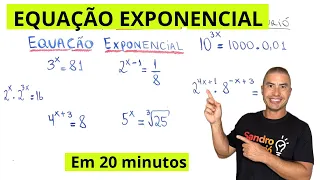
EQUAÇÃO EXPONENCIAL EM 20 MINUTOS | FÁCIL e RÁPIDO
This video provides a comprehensive guide to solving exponential equations, covering various techniques such as equating bases, using exponent rules, handling fractions and roots, and employing substi
 9 min
9 minImpressão 3D: como reduzir tempo e filamento sem perder qualidade
This video explains how to optimize 3D printing settings to reduce print time and improve product quality for a subscriber's product, focusing on layer height, infill, supports, and wall settings.
 46 min
Köklü İfadeler 📘 8'den 9'a Hazırlık Kampı #2026
This video lesson introduces radical expressions, covering their notation, conversion between exponential and radical forms, simplification, arithmetic operations, and the concept of conjugates, prepa