Why Europe is poorer than it should be | Business Beyond
By DW News
This is an AI-generated summary of “Why Europe is poorer than it should be | Business Beyond” — a 20 min YouTube video by DW News, published September 11, 2026. It condenses the full transcript into 10 key takeaways with clickable timestamps.
Summary
The European Union's economic potential is significantly hampered by internal fragmentation, where differing national rules and regulations create barriers to trade, labor mobility, and investment, preventing the bloc from competing effectively on a global scale.
Key Points
- The EU, despite being one of the world's largest economies, is losing ground in global GDP share and productivity growth compared to other major markets like the United States.
- The economic cost of these internal barriers is substantial, with some estimates suggesting they slow down the EU economy as much as an 110% tariff would.
- These barriers restrict the free movement of people, goods, and services, making it difficult for professionals to work across borders and for businesses to expand and sell products throughout the EU.
- While diversity is a strength, the challenge lies in integrating economies without letting national standards and traditions become insurmountable obstacles to a unified market.
- Internal fragmentation, characterized by 27 member states operating under their own distinct rules and regulations, creates significant barriers within the EU's supposed single market.
- Examples like a French baker needing to requalify in Germany or a startup facing different fire safety regulations in various EU countries illustrate the practical impact of this fragmentation.
- Europe struggles to retain its tech startups, with many founders seeking opportunities in the less fragmented and larger market of the United States, contributing to a significant tech lag.
- A major issue is the lack of accessible capital for European startups, as European savings are often parked in banks or invested domestically rather than pooled into a larger, more accessible European capital market.
- Initiatives like 'EU Inc.' and the 'Savings and Investments Union' aim to simplify rules and consolidate capital markets, but face resistance from member states reluctant to cede national control.
- Ultimately, Europe's ability to compete globally hinges on overcoming these internal divisions and acting as a unified economic bloc, a challenge that requires significant trade-offs at the national level.
Summarize any YouTube video, free
You just read an AI summary of this video. Paste any other YouTube link and get the key points with clickable timestamps in seconds — no signup, 5 free a day.
More Resources
More Summaries
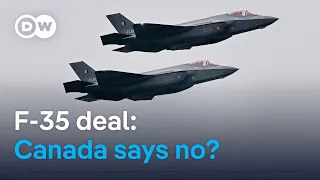 15 min
Is the US about to lose a multi-billion dollar deal? | DW News
Canada is grappling with a multi-billion dollar decision on whether to proceed with its full order of American-made F-35 fighter jets, amidst escalating trade tensions with the U.S. and strategic ques
 7 hr 9 min
【Minecraft】GIVE ME THAT MACE 🔨【Kaela Kovalskia / hololiveID】
The streamer experiences a painful eye irritation from accidentally applying body oil, then embarks on a lengthy Minecraft session focused on exploring trial chambers, collecting rare items, and attem
 3 min
3 minRiset 11
This video explores the ongoing debate about whether schools should require students to wear uniforms, presenting historical context, statistics, and arguments from both proponents and opponents.
 1 hr 48 min
The Man Who Predicted The Iran War: The Next 9/11 Will Target Your Bank Account! | Professor Jiang
The video argues that global civilization is on the brink of collapse due to the breakdown of the petrodollar system, geopolitical conflicts, and the regression of technological progress driven by deg
 2 hr 22 min
Build & Sell AI SaaS Products (2 HOUR COURSE)
This video provides a comprehensive, live demonstration of building an AI SaaS product from initial ideation and pain point discovery through planning, development, branding, deployment, and strategic