How To Tattoo Choosing The Correct Needles For Lining & Shading! + Do Not Make This Mistake!!!
By Jono Smith
This is an AI-generated summary of “How To Tattoo Choosing The Correct Needles For Lining & Shading! + Do Not Make This Mistake!!!” — a 11 min YouTube video by Jono Smith, published July 12, 2020. It condenses the full transcript into 10 key takeaways with clickable timestamps.
Summary
This video provides a comprehensive guide to selecting the right tattoo needles, explaining their nomenclature, types, common configurations, and practical application, while also addressing common misconceptions and offering personal preferences to build confidence in tattoo artists.
Key Points
- The number of needles used for a tattoo is entirely up to the artist's preference and what is necessary to achieve a successful outcome, emphasizing that there is no single “right” answer.
- Tattoo needle packages display numbers indicating gauge (diameter), the number of needles, and their configuration (e.g., 12 07 RL for standard 0.35mm diameter, seven needles, arranged as a round liner).
- Double zero (10 gauge) needles are popular as they cause less skin trauma than standard 12 gauge but offer better ink flow than 8 gauge bug pins.
- Needle gauge refers to the diameter, with 12 gauge (0.35mm) being standard, 10 gauge (0.3mm) also known as double zeros, and 8 gauge (0.25mm) being true bug pins.
- Needle taper is the length from where the needle begins to thin to its tip, with shorter tapers generally preferred for lining and longer tapers for shading, though this is often a matter of personal preference.
- Common needle configurations include round liners (versatile for lines, script, dot work), magnum shaders (standard for shading/color packing, curved for softer effects), round shaders (for small area shading), and flat shaders (for shading and straight edges).
- For intricate work or tight areas, it's effective to use a smaller “liner” needle to pack color, demonstrating the flexibility in needle application beyond their designated configuration.
- A common mistake is believing liners are exclusively for lining and shaders for shading; instead, needles should be viewed as different sized paintbrushes, chosen for their ability to efficiently perform a task regardless of their label.
- In realism tattooing, subtle soft shades are often preferred over distinct lines, which can be achieved by angling a curved magnum needle to use only one point for delicate effects.
- Pre-selecting needles based on the tattoo's elements and mapping out their use before starting the work helps ensure efficient and effective execution.
Summarize any YouTube video, free
You just read an AI summary of this video. Paste any other YouTube link and get the key points with clickable timestamps in seconds — no signup, 5 free a day.
More Resources
More Summaries
 8 min
8 minTattoo Needles Explained | What Beginners Get Wrong
This video provides a comprehensive guide to round liner tattoo needles, explaining their structure, various sizes and applications, proper voltage and technique adjustments, and essential tips for be
 12 min
Scientists Finally Solved the Balkan DNA Mystery — Only One Population Matched
Recent DNA studies, analyzing ancient genomes, have definitively pinpointed a specific region stretching from southern Belarus into central Ukraine as the ancestral homeland of Slavic peoples, settlin
 8 min
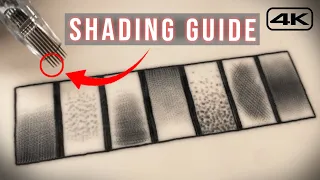
8 minShading Guide for Beginners - 7 Tattoo Shading Techniques
This video demonstrates and explains seven different tattoo shading techniques, detailing their application, suitable needle types, common mistakes to avoid, and general best practices for achieving v
 24 min
Doraemon Episode 735AB Subtitle Indonesia, English, Malay
This video showcases Nobita and Doraemon's adventures, first exploring a magical fairytale world with animal transformations and then learning about and utilizing various futuristic artificial satelli
 7 min
7 minWhat Voltage To Set (Tattoo Machine)
This video provides guidance on selecting the appropriate voltage for tattoo machines, particularly for beginners, explaining how different settings affect lining and shading techniques and emphasizin