The 7 Skills You Need to Build AI Agents
This is an AI-generated summary of “The 7 Skills You Need to Build AI Agents” — a 14 min YouTube video by IBM Technology, published April 14, 2026. It condenses the full transcript into 10 key takeaways with clickable timestamps.
Summary
Building AI agents for production requires a broader engineering skill set beyond prompt writing, encompassing system design, tool contracts, retrieval, reliability, security, observability, and product thinking.
Key Points
- Adapting to this broader skill set will enable engineers to create agents that function reliably in real‑world production.
- Prompt engineering is just the recipe; agent engineering is like being a chef who must understand ingredients, techniques, and workflow.
- System design is the foundational skill, requiring architecture that coordinates LLMs, tools, databases, and sub‑agents.
- Designing clear tool contracts and schemas prevents ambiguous inputs that can cause dangerous behavior.
- Retrieval engineering (RAG) is critical; proper document chunking, embedding, and re‑ranking ensure relevant context for the model.
- Reliability engineering adds retry logic, timeouts, circuit breakers, and fallback paths to handle API and service failures.
- Security and safety involve defending against prompt injections, validating inputs, filtering outputs, and enforcing permission boundaries.
- Evaluation and observability demand comprehensive tracing, logging, test suites, and metrics to measure success, latency, and cost.
- Product thinking focuses on user experience, confidence signaling, graceful error handling, and escalation to humans to build trust.
- Practical steps include tightening tool schemas with strict types and examples, and debugging failures by tracing retrieval and tool selection rather than tweaking prompts.
Summarize any YouTube video, free
You just read an AI summary of this video. Paste any other YouTube link and get the key points with clickable timestamps in seconds — no signup, 5 free a day.
More Resources
More Summaries
 1 hr 7 min
Live | Same Sex Marriage Case | Supreme Court of India | CJI Chandrachud with Constitutional Bench
The Solicitor General argues that defining marriage for same-sex couples is a complex legislative matter, not a judicial one, due to its extensive social, legal, and religious ramifications, the need
 4 min
4 minTokyo Revengers react to Emma as Player 222 || Part 1/2 || 🇧🇷|🇺🇲
This video is a music track featuring repetitive vocalizations and two distinct lyrical sections about monsters and a romantic exchange.
 13 min
I Asked an Arab Muslim About Spain… I Wasn’t Ready for His Answer
The video describes the current situation in Spain as a full-blown invasion by fighting-age men, driven by radical intent to destroy rather than contribute, warning of severe consequences due to gover
 28 min
How to Stop Abandoning Yourself in Relationships
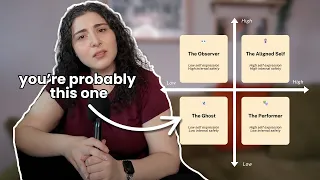
This video explains self-abandonment in relationships, outlining four archetypes based on internal safety and self-expression, and provides a six-step framework to unlearn this deeply wired behavior a
 18 min
A doctor's touch - Abraham Verghese
The speaker advocates for the critical importance of the physical examination and human touch in medicine, arguing that over-reliance on technology leads to missed diagnoses and the loss of a transfor